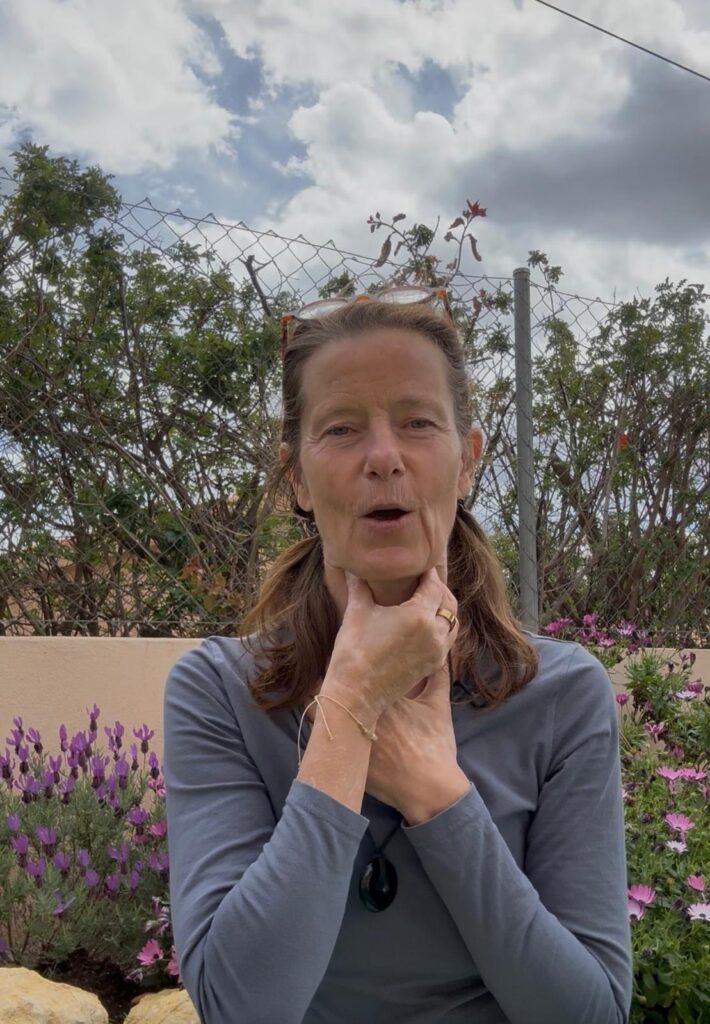
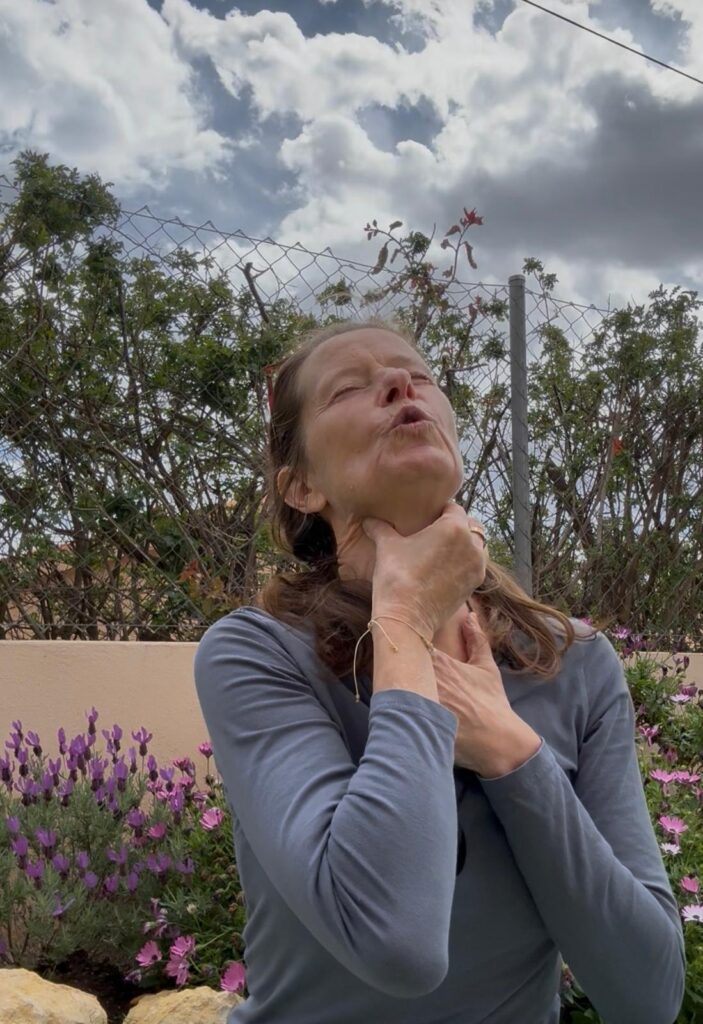
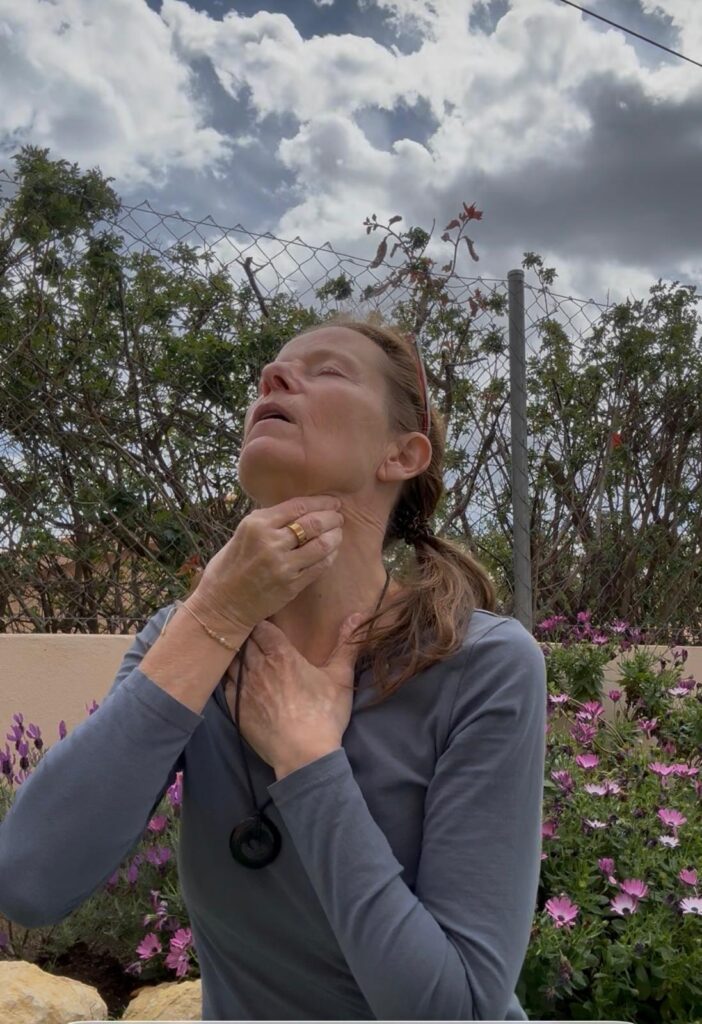
THYROID RESET ~ Regulates temperature and hormone production ~ Reduces tension in the area shoulders and up ~ Increases energy reserves ~ Opens the throat and makes it easier to communicate
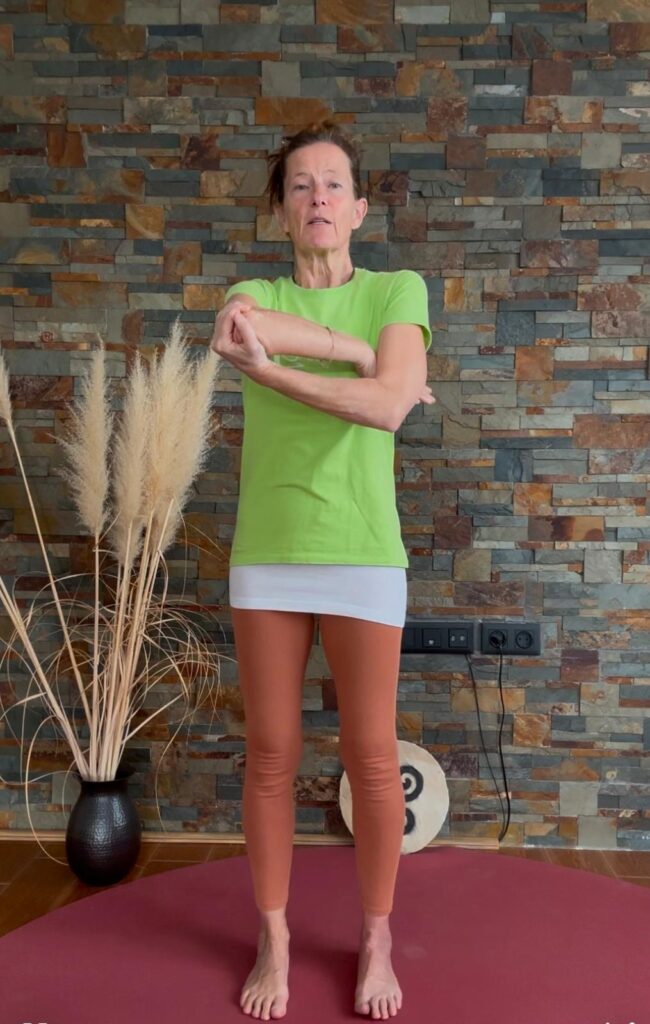
Swinger Do you feel tightness in your neck or shoulder area? This Fascial Maneuver helps you with: ~ shoulder/neck issues ~ arm & elbow pain ~ releases your hips
Dear Global Yoga Community, As we are transitioning into a new year, I felt inclined to write this month a little blog again about “Transitions”. Like you know I get most inspired when I walk my dog in the woods and the other day this came to my mind and stayed with me. What does transition mean? Why do we want to avoid them or try to ignore them or speed them up? I started to ‘research’ a bit and would like to share this with you.
~ ~ ~ Life transitions are the moments where one chapter loosens and another hasn’t fully formed yet. They might be chosen or forced, visible or quiet – but all of them ask something from us. Below are some common life transitions to have a look at.
Developmental Transitions Like growing up, midlife shifts, aging, menopause or retirement which means the identity either expands or contracts and how you defined yourself doesn’t fit anymore. To move through this transition more conscious and smooth allow yourself to grieve the version of you that is ending and redefine success for this stage. Redefine for yourself success for this stage. Key mindset:Nothing is wrong – I am maturing.
Identity Transitions Like Career change, losing a role/title or redefining values when your internal truth no longer matches your external life and your integrity is being negotiated. Can you permit yourself to be in this in-between phase were you don’t know yet. Choose environments that reflect who you’re becoming, not who you were. Key mindset:Confusion is often honesty in transition.
Relationship Transitions Like divorce, new love, friendships fading or caregiving roles when your attachment patterns are being rewired and your belonging is renegotiated. To help you through this it helps if you name what you lost, not just who. Set new boundaries instead of new expectations and resist rushing into a replacement connection. Key mindset:Loss and love can coexist.
Loss & Grief Transitions Like Death, illness, loss of ability or dreams that didn’t happen when the future you imagined collapses and the meaning is destabilized. Let grief be nonlinear and create private rituals (writing, walking, symbolic goodbyes). Avoid timelines imposed by others. Key mindset:Grief is not a problem to solve.
Crisis & Shock Transitions Like accidents, betrayal, financial collapse or burnout when the nervous system overloaded and the sense of safety is interrupted. The most important thing is to focus on stabilization (sleep, food, routine). Make your decisions one right step at a time and surround yourself with trusted humans that provide for you emotional support. Key mindset:Stability precedes clarity.
Intentional Transitions Like moving countries, starting a business, or lifestyle redesign when you step into uncertainty on purpose and freedom and fear arrive together. Know that doubt might come up even when the choice is right. Build for yourself some anchors like habits, people or places and clarify for yourself that discomfort is not misalignment. Key mindset:Fear doesn’t mean you chose wrong.
Invisible Transitions Like healing old wounds, letting go of beliefs, internal boundaries or redefining self-worth when your inner architecture is changing and you have no external validation yet. Support yourself in those times by tracking the internal evidence instead of looking for external results. Journal about micro-shifts and practice self-trust without outside validation. Key mindset:Not all growth is visible.
Liminal Transitions Like between jobs, identities, homes, or relationships when the old structure is gone and new one is not formed yet where deep creativity and vulnerability are coexisting. In this period of time don’t rush closure and keep life simple and slow. Start to ask better questions instead of forcing answers. Key mindset:The in-between is a place, not a failure.
To navigate through any of these transitions there are some universal tools: ~ Name it: “I’m in a transition.” This alone reduces self-judgment. ~ Normalize ambivalence: You can feel grateful and scared at the same time. ~ Lower performance pressure: Transition is not a productivity phase ~ Delay meaning-making: Clarity and understanding often comes after movement, not before.
A quiet truth is that most suffering in transitions doesn’t come from change itself, but from expecting ourselves to function as if nothing is changing.
Transitions ask for slowness, honesty, and compassion – not quick fixes. If you’re in one now, you’re not behind. You’re not broken. You’re in a passage. And passages are meant to be walked, not rushed.
~ ~ ~ So what came to my mind now was: Isn’t life itself from birth to death just a transition? And if we look at it like this, maybe we can live and accept all the transitions more consciously and with gratitude.
I believe movement is a big help in going through transitions. Like the fascial maneuver of the month brings us out of stress, the fascia work and yoga practice not only release tension and open us up not only on the physical level. In vinyasa flow there are endless transitions between asanas as well as the internal, non visible ones and plenty opportunities to stay in the discomfort. I am excited about our conscious transitions this month. 🙂
FASCIAL MANEUVER OF THE MONTH
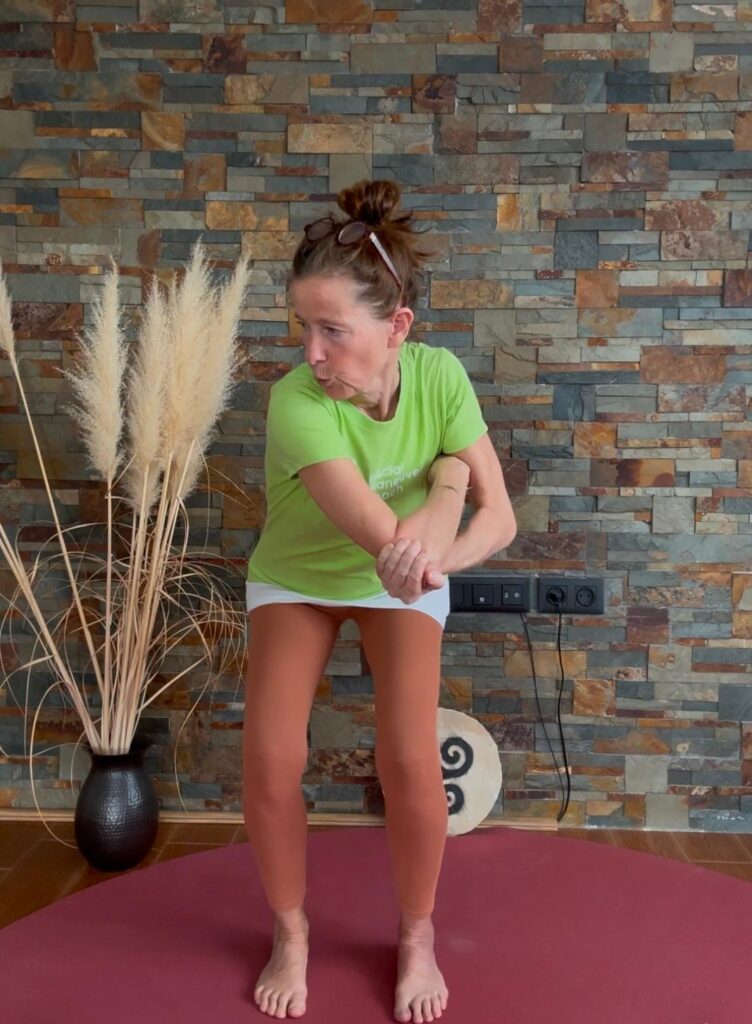
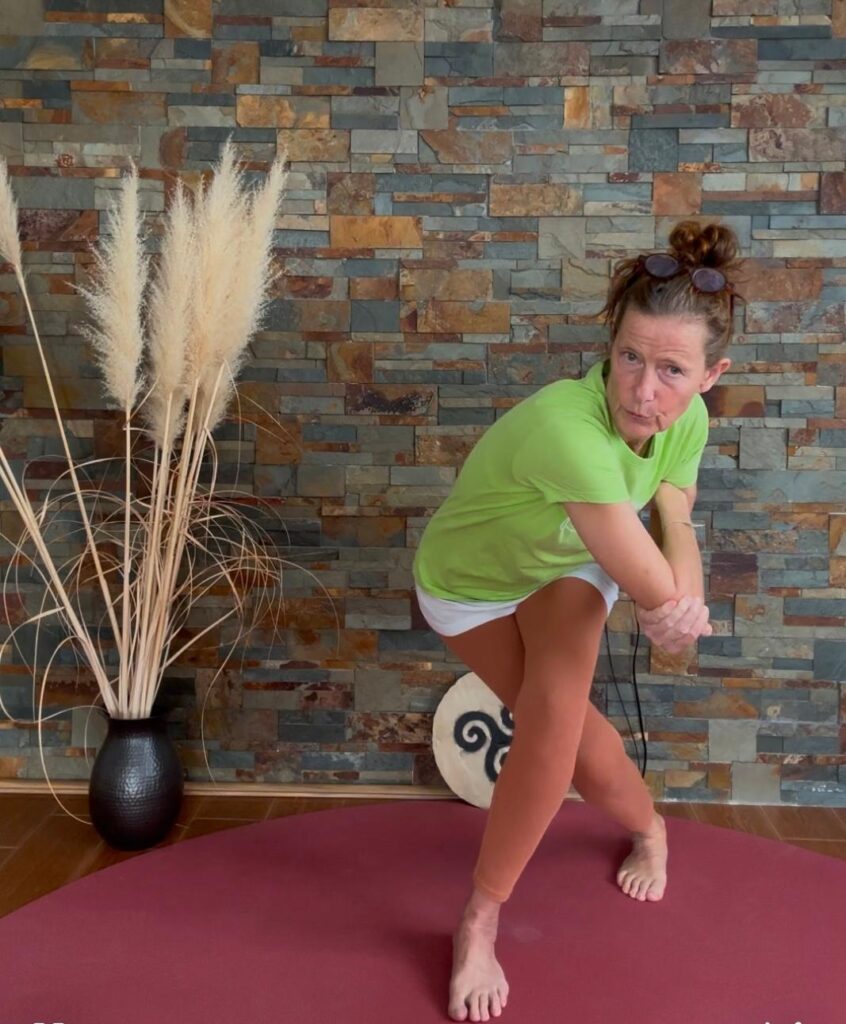
Totally Twisted There are a lot of versions of this maneuver and you can always expand it and change it to your need and liking. Here are some of the benefits: ~ stress reduction (physical and mental) ~ mobilization of the spine and hips ~ expansion of breath capacity
Chest Torque All my (yoga) life I have been saying ‘The world needs Heart Opening’, so I taught all these years a lot of chest/heart opening in my classes. I believe today it is even more important than ever to Open our Heart!
Here are some benefits: – opens the chest – relaxes the shoulders – counteracts stress/anxiety/overwhelm
Upper Chest Torque This is a great Maneuver if you feel tight in your pectoris or shoulder region ~ opens the chest area ~ releases the shoulder blade ~ relaxes the neck and side of the face and head
UPPER ARM TORQUE When the cold season starts and the temperatures drop, we tend to tighten up in the body. Especially around the shoulder area. This Fascial Maneuver will help you to ~ release shoulder, neck & jaw ~ open the ears ~ relief tension headaches
WRIST RELEASE ~ Wrist Pain, Carpal Tunnel Syndrome? ~ Finger Aches & Restrictions? ~ Neck/Shoulder Tension? ~ Restriction in your Ankles? You can do it seated at your office desk and the desired relief is just 6 breaths away! 🙂
Do you feel tension, tightness or pain in the knee? This is the perfect Fascial Maneuver for you. It also mobilizes the hip and ankle joints. You can do it anywhere, also seated on a chair – it can’t be more efficient than that!
Wednesday 02.07 Twist & Ease in the Hip-Joint Flow
Thursday 03.07. Open Theme Yogis Choice
Friday 04.07 Feel & Direct the Energy Slow Flow
YOGA POSE OF WEEK II
Monday 07.07 3 Breaths Flow
Wednesday 09.07 Rest in Down Dog Slow Flow
Thursday 10.07 Open Theme Yogis Choice
Friday 11.07 Recording Flow
YOGA POSE OF WEEK III
Monday 14.07 Ground to Flow Slow Flow
Wednesday 16.07 Warrior III as Transition Flow
Thursday 17.07 Open Theme Yogis Choice
Friday 18.07 In & Out of Warrior III Flow
YOGA POSE OF WEEK IV
Monday 21.07 Happy Hips Flow
Wednesday 23.07 Pigeon & Variations Flow
Thursday 24.07 Open Theme Yogis Choice
Friday 25.07 Peace Within Slow Flow
Monday 26.07 What do you need Flow
2026 copyright nicoleohme
On this website we use first or third-party tools that store small files (cookie) on your device. Cookies are normally used to allow the site to run properly (technical cookies), to generate navigation usage reports (statistics cookies) and to suitable advertise our services/products (profiling cookies). We can directly use technical cookies, but you have the right to choose whether or not to enable statistical and profiling cookies. Enabling these cookies, you help us to offer you a better experience.